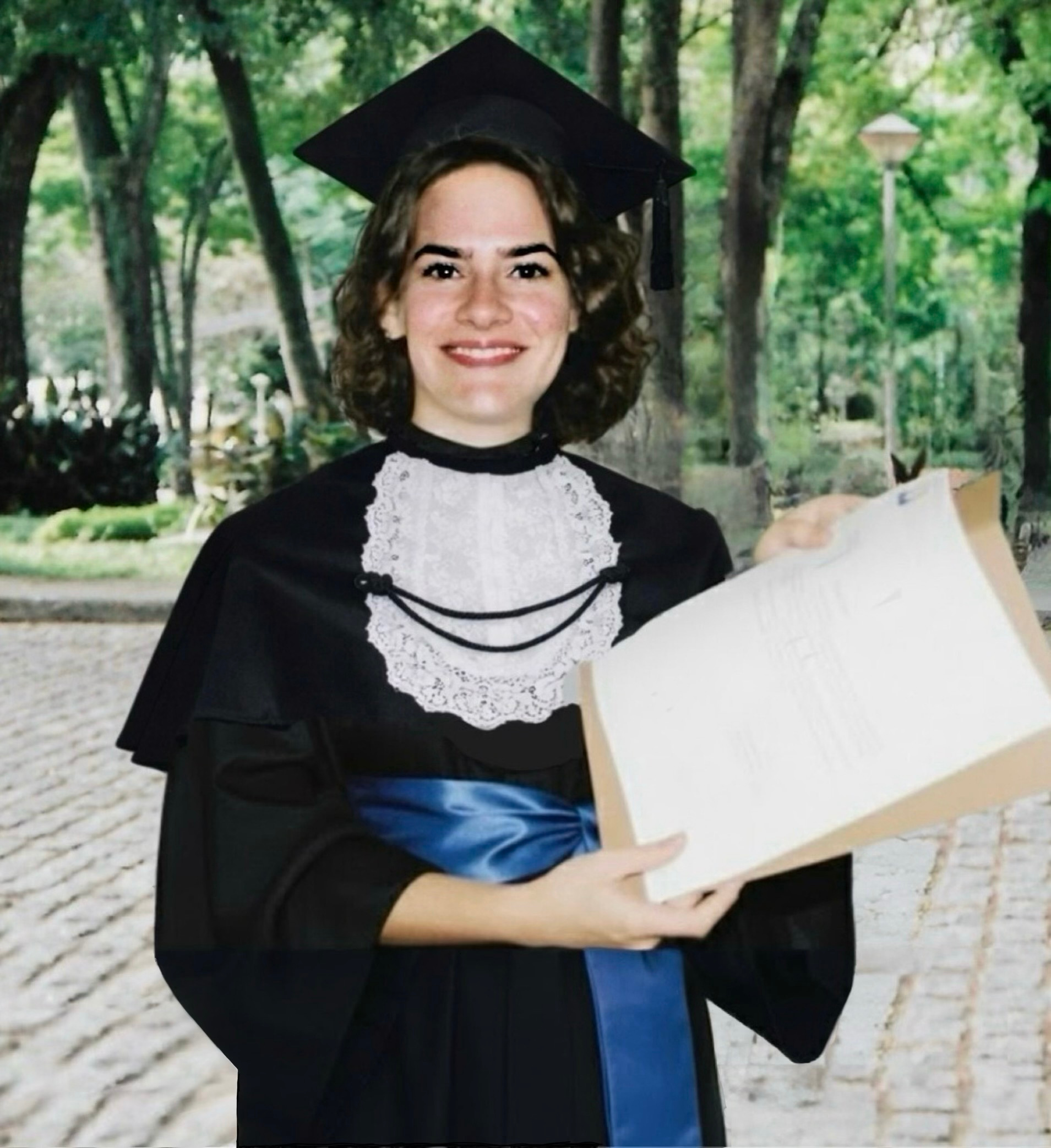
Hi, I’m Nara
I hold a Bachelor’s degree in Computer Engineering with professional experience in software engineering. I am currently a Physics major candidate. My research focuses on analyzing data from heavy-ion experiments at the Large Hadron Collider (LHC) and the Relativistic Heavy Ion Collider (RHIC), leveraging advanced statistical frameworks to probe the properties of matter under extreme conditions — characteristic of the universe’s earliest microseconds, when it existed as a quark–gluon plasma. More Information About Me
-

Bachelor’s degree in Computer Engineering
São Carlos School of Engineering (EESC/USP)
03/2006 – 03/2011Physics major candidate in Physics
Physics Institute (IF/USP)
01/2025 – in progress
 6th place
· 2003
· Brazilian Physics Olympiad
· National
6th place
· 2003
· Brazilian Physics Olympiad
· National
 18th place
· 2002
· State Mathematics Olympiad
· Regional
18th place
· 2002
· State Mathematics Olympiad
· Regional
 9th place
· 2008
· State Informatic Olympiad
· Regional
9th place
· 2008
· State Informatic Olympiad
· Regional
This section will gather my peer-reviewed publications and preprints as they become available, documenting my ongoing academic research and collaborations. It will be updated as results are published.
Coursework from my undergraduate and graduate studies, demonstrating my formal training in physics, mathematics, engineering, entrepreneurship, statistics, and machine learning. Each course links to lecture notes, references, and related materials. Courses marked with an asterisk (*) are planned or currently in progress.
Invited and contributed talks presented at seminars, conferences, and academic meetings.
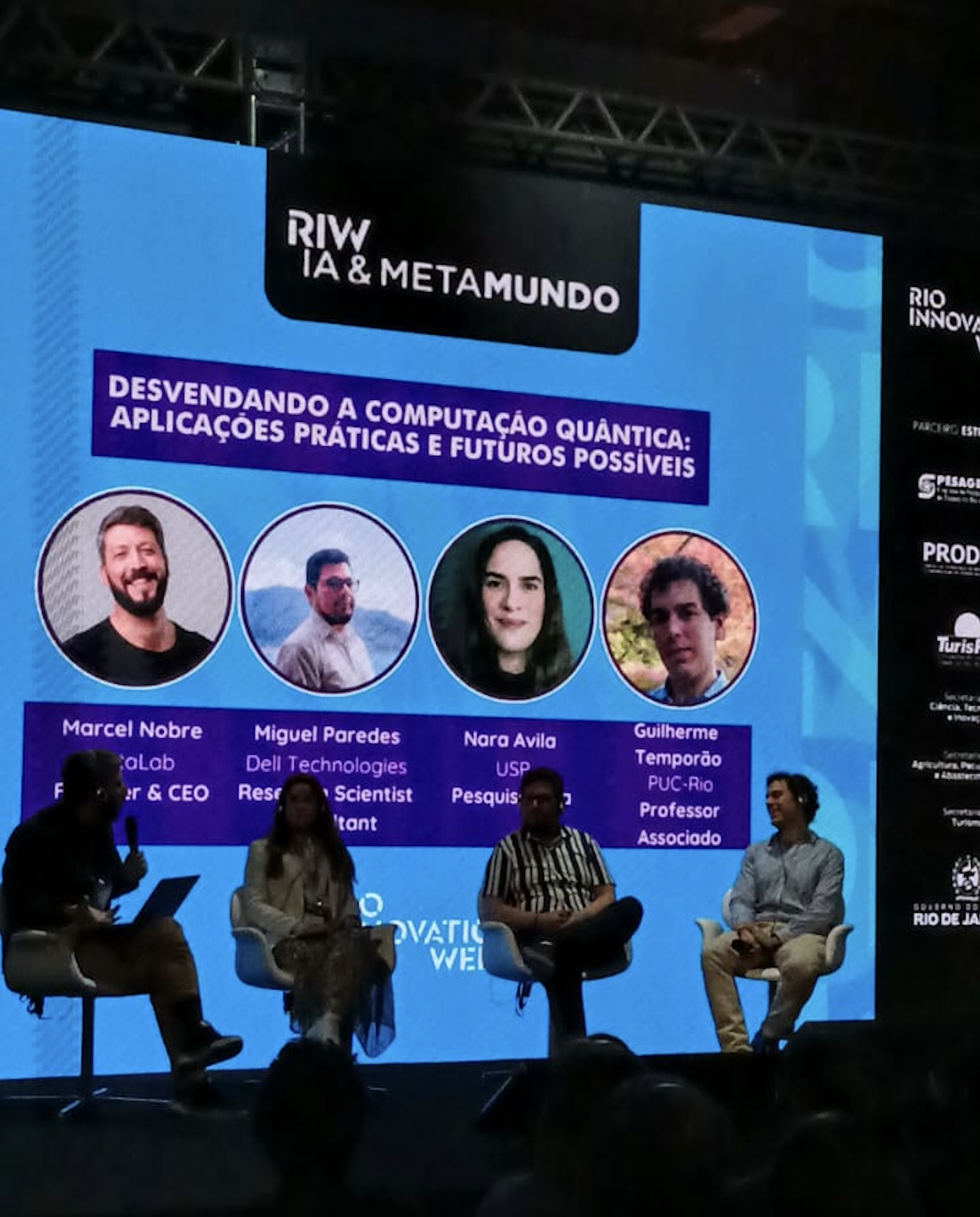
IA e Meta Mundo
Rio Innovation Week
13/08/2024I took part in Rio Innovation Week 2024 on the AI & Metaworld stage, in the panel “Demystifying Quantum Computing: Practical Applications and Possible Futures.” We discussed what quantum computing can do today, where it is realistically headed, and how to connect cutting-edge research to real-world problems.
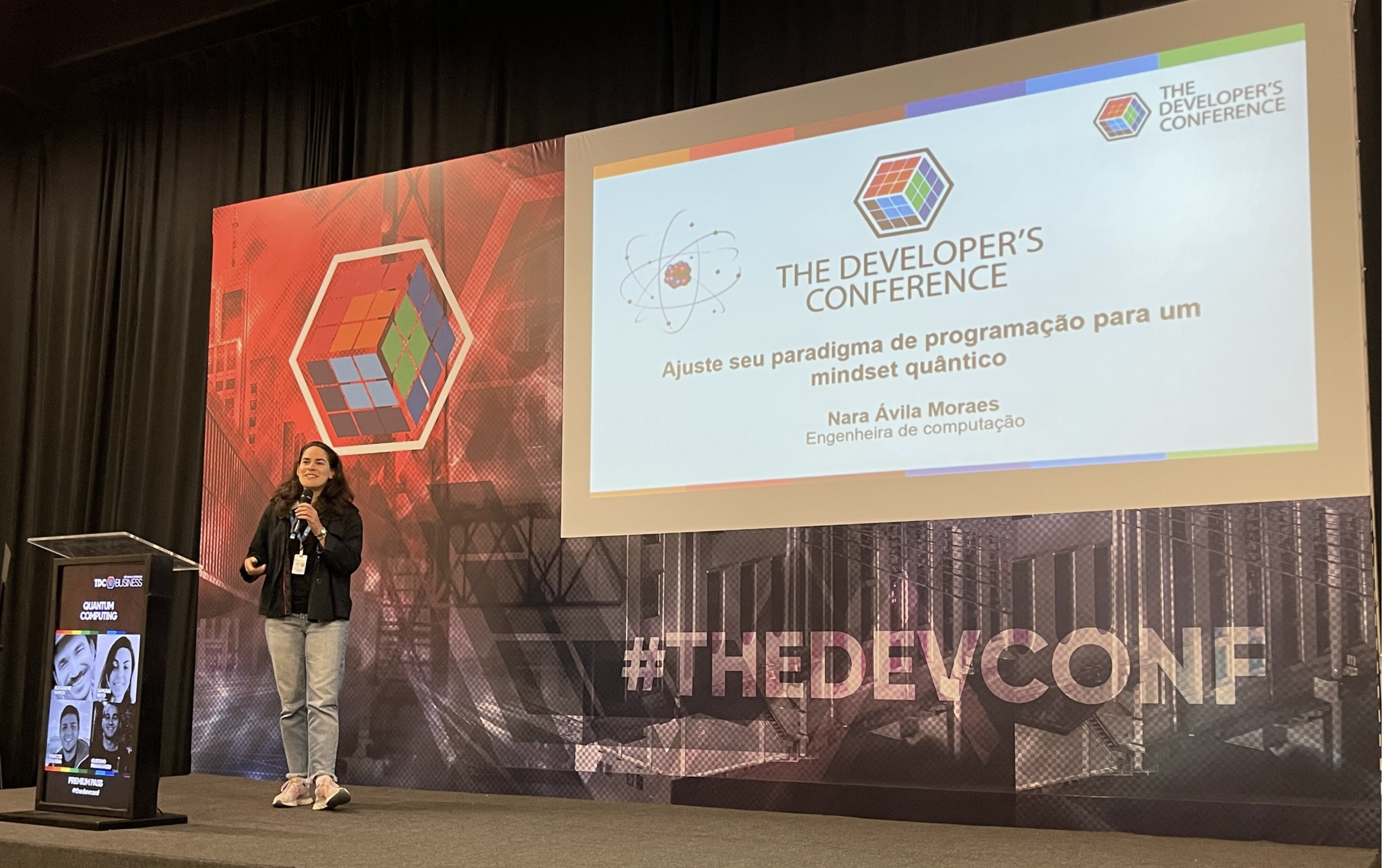
TDC Business
The Developer Conference
24/08/2022At The Developer Conference (TDC Business), I presented “Adjust Your Programming Paradigm for a Quantum Mindset,” a talk aimed at software developers curious about quantum computing. I explored how quantum concepts such as superposition, measurement, and probabilistic outcomes require a fundamentally different way of thinking about algorithms and program structure. The session focused on building intuition rather than code, helping developers understand how quantum computing reshapes the mental models behind programming.
Tech Day
Open Co
08/12/2022Follow-up talk at Open Co Tech Day presenting the practical implementation of a quantum search algorithm, building on previous discussions of quantum computing fundamentals, and including a time computational complexity analysis.
Tech Day
Open Co
05/12/2021Invited talk at Open Co Tech Day introducing quantum computing concepts, recent developments, and practical entry points for industry engagement.
This section presents the academic research projects I have developed to date. These projects were carried out within an academic context, combining theoretical analysis, computational methods, and practical experimentation.
Heavy Ion Collision
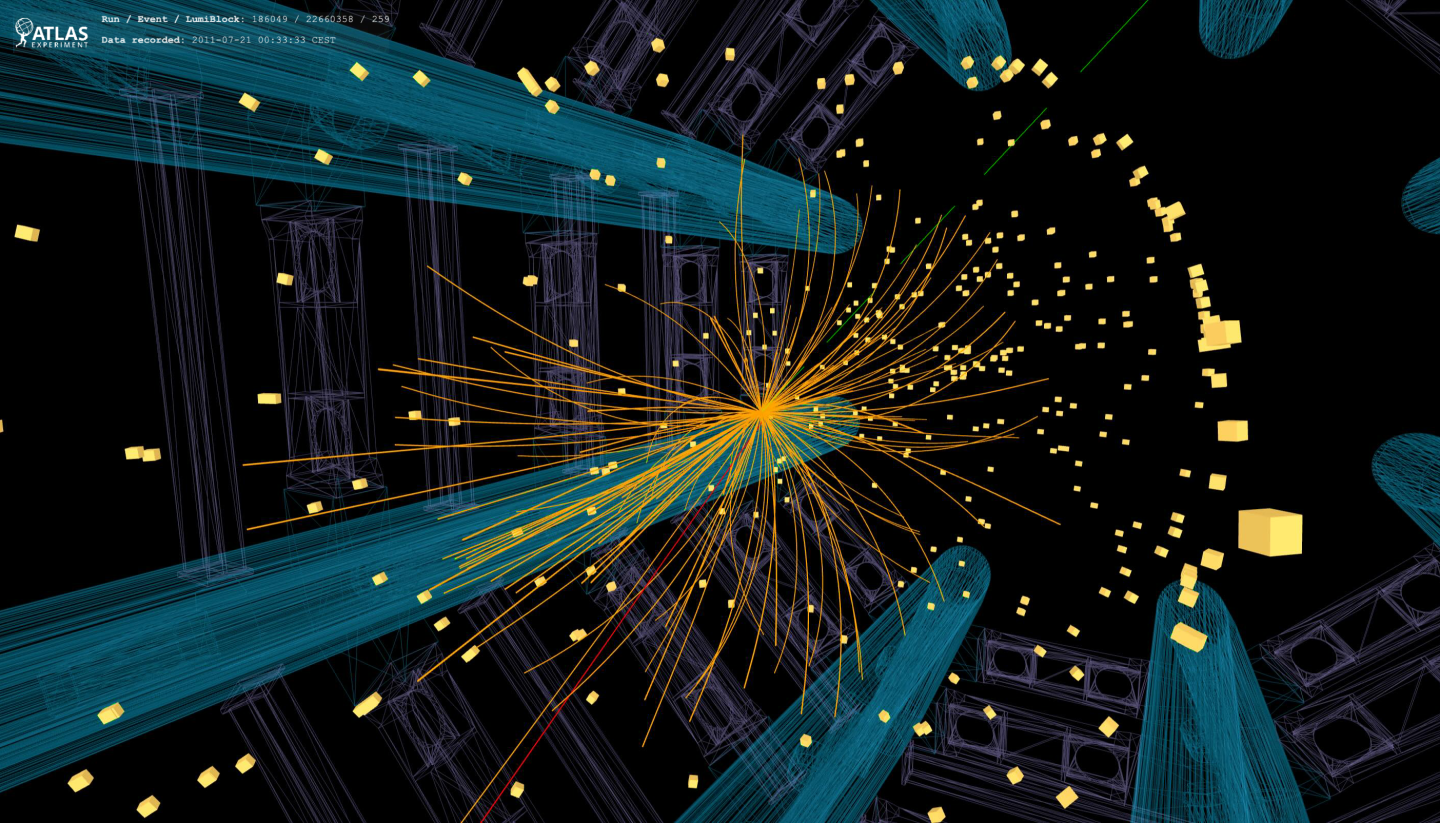
This project aims to investigate relativistic heavy-ion collisions at the Large Hadron Collider using a model–to-data comparison approach. The work focuses on training statistical emulators to reproduce the output of computationally intensive theoretical models, avoiding the need to run full dynamical simulations. These emulators are then used to study correlations between experimental observables and physical parameters—such as shear and bulk viscosity, rapidity, transverse momentum spectra, among others—allowing an assessment of how different observables constrain the underlying collision dynamics.
C++ Python TRENTo MUSIC Quantum observable correlations Large Hadron Collider (LHC) Heavy-ion collisions Gaussian Processes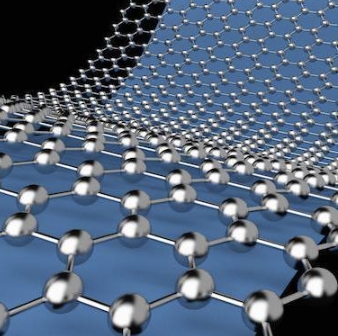
Quantum Material Simulation
My research evolved through quantum simulations of molecular systems. I modeled electronic Hamiltonians within the Born–Oppenheimer approximation and expressed these Hamiltonians through second quantization, mapping them to qubit representations using the Jordan–Wigner transformation. I performed variational ground-state energy estimations in hybrid quantum–classical architectures, implementing the UCCSD ansatz with Qiskit Nature and conducting comparative experiments with PennyLane on simple molecular systems. Building on this variational framework, I explored neural-network quantum states—specifically restricted Boltzmann machines (RBMs)—as expressive ansätze for representing molecular ground states.
Quiskit Nature Pennylane Born–Oppenheimer approximation Fermionic Hamiltonians Jordan–Wigner transformation UCCSD ansatz Restricted Boltzmann Machine ansatz Variational Methods Ground state energy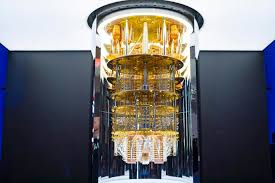
Quantum Computing
In this work, I studied quantum information encoding mechanisms, the construction of gate-based quantum circuits, and their implementation using Google Cirq, Amazon Braket, IBM Qiskit and CERN Qibo SDKs. I analyzed the execution of quantum operations and algorithms across different quantum hardware platforms—such as superconducting, trapped-ion, photonic, and neutral-atom systems—examining execution time, noise, and decoherence parameters. I implemented algorithms such as the Deutsch algorithm and Grover’s quantum search, and carried out introductory studies in quantum machine learning using quantum support vector machines (QSVM). To address noise in NISQ devices, I explored quantum error mitigation techniques, including zero-noise extrapolation (ZNE) and Clifford-based regression methods.
Python AWS Braket IBM Qiskit Google Cirq CERN Qibo Grover's Search Algorithm Deutsch's Algorithm Quantum Support Vector Machines (QSVM) Quantum gates Neural Atom Superconducting Photonic Ions Trapped Clifford Data Regression (CDR) Zero-Noise Extrapolation (ZNE)